Why Sheet Pan Dinners Simplify Cooking
Sheet pan dinners bring together a protein and colorful vegetables on one sturdy pan, roasted in the oven until everything is cooked and flavorful. This approach is popular because it is quick, easy, uses few dishes, and fills the kitchen with a warm, appetizing aroma. Plus, you get a balanced meal with protein and veggies from a single sheet.
For busy weeknights, the appeal is clear: you spend a little time prepping ingredients, then let the oven do the work. Cleanup is minimal, and you can even line the pan to make it faster. With a bit of planning, sheet pan dinners can become a go-to strategy for healthy family recipes that fit into your routine.
- Complete meal on one pan: protein plus vegetables
- Fewer dishes to wash
- Great for meal prep: cook once, eat multiple times
- Customizable to different dietary needs
Sources: Cook Smarts, My Montana Kitchen
Choosing the Right Pan and Lining
The pan you use makes a difference. A sturdy, cookie-sheet-sized pan allows you to spread ingredients out so they cook faster and get crispier. Flimsy baking sheets can warp in the oven, leading to uneven cooking—some spots may pool with liquid while others stay dry. Invest in a heavy-duty rimmed sheet pan for reliable results.
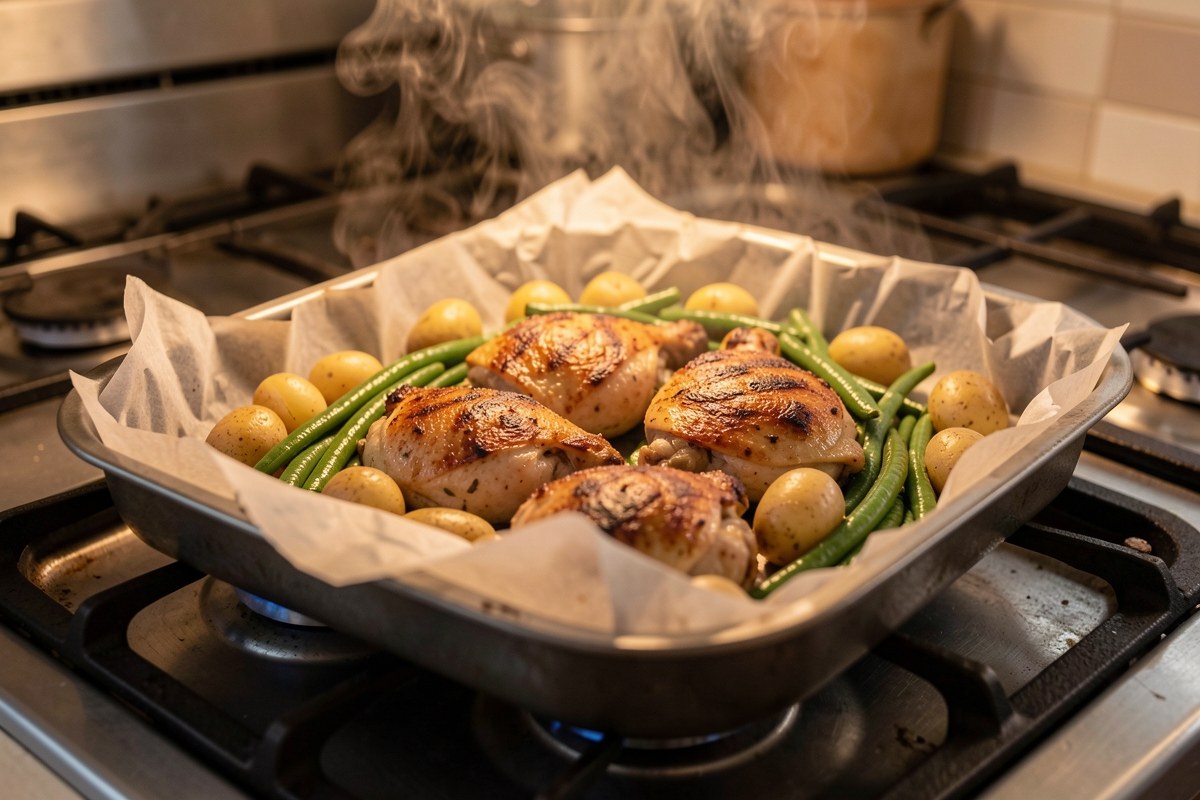
Lining the pan with parchment paper or aluminum foil prevents sticking and makes cleanup much easier. However, a lining also acts as a barrier between the heat and the ingredients, which can make pieces soft rather than crisp. If you prefer crispier edges on your chicken or potatoes, you can preheat an empty lined or unlined pan in the oven before adding the food. This helps sear the bottom of items like chicken skins and potato edges.
Ultimately, choose a lining based on your priority: easier cleanup or maximum crispiness. You can also skip the lining if you don't mind a little scrubbing.
- Use a sturdy, rimmed sheet pan about the size of a cookie sheet
- Spread ingredients out to promote even browning and avoid soggy spots
- Parchment or foil makes cleanup a breeze but may soften textures
- Preheating the empty pan can boost crispness
Sources: Real Plans, Learn How Do It
Cooking: Timing Different Foods
Not all foods roast at the same speed. Dense vegetables like potatoes and carrots usually need more time in the oven than delicate vegetables like asparagus, cherry tomatoes, or spinach. If you put everything on the pan at the start, you risk overcooking the quick-cooking items before the dense ones are tender.
The solution is to add ingredients in stages based on their cooking times. Start with the items that need the longest roast—often potatoes, carrots, or other root vegetables—and add quicker-cooking items partway through. Cutting vegetables into uniform pieces also helps them cook evenly, so no piece is underdone while another turns to mush.
Here’s a simple approach: think about what you’re cooking, estimate which pieces take longest, and plan to add the faster items later. For a chicken and vegetable combo, you might roast chicken and potatoes first, then add asparagus or bell peppers for the last 10–15 minutes.
- Dense vegetables (potatoes, carrots) need more time than delicate ones (asparagus, cherry tomatoes)
- Cut vegetables into uniform pieces for even cooking
- Add ingredients at different times to balance doneness
- Stir or flip larger items halfway if needed
- Prep your protein and vegetables, cutting them into uniform pieces.
- Arrange the longest-cooking items (like potatoes and carrots) on the pan.
- Add medium-cooking items (like chicken thighs or salmon) alongside them.
- Set the oven temperature between 400°F and 425°F, depending on your recipe.
- Roast until the longer-cooking foods are nearly done.
- Add delicate vegetables (asparagus, cherry tomatoes) for the final stretch.
- Check that everything is cooked through and serve from the pan.
Sources: Real Plans, Learn How Do It
Chicken and Vegetables: A Classic Combination
A classic sheet pan dinner combines chicken with a mix of vegetables. For example, a lemon herb chicken with potatoes and asparagus roasts at 425°F for 30 to 35 minutes, as described in one source. The key is to start the potatoes and chicken together, then add the asparagus near the end so it stays bright and tender.
To try this combination at home, place chicken thighs or breasts on the pan with baby potatoes. Season with lemon, garlic, and herbs like thyme or rosemary. About 10 minutes before the end of the roasting time, scatter asparagus spears over the pan and let everything finish together. Serve straight from the pan for an effortless dinner.
- Chicken (thighs or breasts)
- Baby potatoes
- Asparagus
- Lemon, garlic, and herbs like thyme or rosemary
Sources: Learn How Do It
Salmon and Asparagus: A Light Pairing
For a lighter option, salmon and asparagus make a fast, elegant pair. Salmon fillets roast quickly, and asparagus only needs a short time in the oven. You can cook both on one pan with a simple seasoning of olive oil, lemon, and dill.
To prepare, arrange salmon fillets and asparagus in a single layer on a sheet pan. Season as you like. Roast until the salmon is opaque and flakes easily with a fork. Because cooking times can vary based on the thickness of the fillets and your oven, start checking early—around 10 to 12 minutes—and continue roasting as needed. The asparagus should be tender when pierced with a fork.
- Salmon fillets
- Fresh asparagus
- Olive oil, lemon, garlic, and fresh herbs
Sources: Learn How Do It
Customizing with Sauces and Seasonings
One of the best parts of sheet pan dinners is how easy they are to change up. By swapping the sauce or spice blend, you can create a new meal without learning a new technique. Try a Mediterranean profile with olive oil, oregano, and feta; go Asian-inspired with soy sauce, ginger, and sesame; or keep it simple with salt, pepper, and garlic powder.
You can also adapt sheet pan dinners to dietary needs. For a gluten-free meal, choose gluten-free soy sauce or tamari and check that any prepared seasonings are certified. Vegetarian or vegan versions work well with tofu, chickpeas, or halloumi in place of meat—just adjust cooking times so the protein alternatives are heated through.
When customizing, remember to keep pieces similar in size and consider the cooking times of any new ingredients. Check the recommended cooking time for the protein you choose and adjust when you add it to the pan. With a little practice, you’ll learn which combinations work best for your family.
- Try different sauces and seasonings to avoid boredom
- Adapt to gluten-free, vegetarian, or vegan diets easily
- Adjust cooking times based on the protein you choose
- Use colorful vegetables for a visually appealing meal
- Choose your protein: chicken, salmon, shrimp, tofu, or another favorite
- Select vegetables that roast well, such as broccoli, carrots, green beans, or bell peppers
- Pick a sauce or seasoning blend that complements the ingredients
- Cut everything into uniform pieces for even cooking
- Arrange on a lined or preheated pan, leaving space between items
- Roast at 400–425°F, adding delicate vegetables later if needed
- Check for doneness and serve direct from the pan
Sources: My Montana Kitchen, Learn How Do It
Frequently asked questions
What foods cook well on a sheet pan?
Many proteins and vegetables cook beautifully on a sheet pan. Common choices include chicken (thighs, breasts, or drumsticks), salmon and other fish, shrimp, and tofu for vegetarians. Vegetables like broccoli, asparagus, carrots, green beans, potatoes, bell peppers, and cherry tomatoes all roast well. The key is to choose items with similar cooking times or add them in stages so everything finishes at once.
Sources: My Montana Kitchen, Learn How Do ItShould I flip food halfway through?
Flipping isn’t always necessary, but it can help for larger pieces like chicken thighs or whole fish fillets. Turning them halfway through promotes even browning and helps ensure the bottom doesn’t stick if you didn’t use a liner. For smaller items like shrimp or diced vegetables, stirring once or twice is usually enough. Pay attention to your recipe and check for even cooking.
Sources: Real PlansCan I meal prep sheet pan dinners?
Yes, sheet pan dinners are great for meal prep. You can roast a large batch of protein and vegetables, then portion them into containers for lunches or dinners throughout the week. To keep textures appealing, store delicate vegetables separately from crisp ones and reheat gently. You can also prep by chopping vegetables and measuring seasonings in advance, so the actual cooking is quick on busy nights.
Sources: Cook Smarts, My Montana KitchenWhat temperature do I set the oven to?
Most sheet pan dinner recipes call for an oven temperature between 400°F and 425°F. For example, a chicken and potato dish might roast at 425°F for 30 to 35 minutes, while a salmon and asparagus dinner often works at 400°F for about 15 to 20 minutes. Always preheat the oven fully, and check that your food is cooked through before serving.
Sources: Learn How Do ItSources
- 10 Easy Sheet Pan Dinners | Cook Smarts — Cook Smarts
- (Almost) Effortless Sheet Pan Meals In 9 Steps - Real Plans — Real Plans
- "Spring Sheet Pan Dinners For Effortless Weeknight Meals" — Learn How Do It
- From Oven to Table: 15 Healthy Sheet Pan Dinners for Families — My Montana Kitchen