Vegetarian Meal Prep Basics
Vegetarian meal prep is about spending a little time in the kitchen upfront so that you can pull together satisfying meals all week long. By cooking grains, legumes, and vegetables in batches, you create a pantry of ready-to-use components. This approach not only saves time on busy evenings but also helps you eat more plant-based meals without thinking too hard about what to cook.
Start by choosing a few recipes that share common ingredients. For example, if you roast a large tray of mixed vegetables and cook a pot of quinoa, you can use them in grain bowls, wraps, and salads. The idea is to vary the sauces and seasonings so that the same components feel fresh each time.
To get started, pick a prep day that works for you, such as Sunday afternoon. Choose two or three grains and two or three legumes to cook in bulk. Also, roast a large sheet pan of your favorite vegetables, and prepare a simple dressing or sauce. From these basics, you can assemble a variety of meals: a grain bowl with roasted veggies and chickpeas, a wrap filled with quinoa, black beans, and fresh greens, or a quick stir-fry with tofu and farro.
- Pick a prep day that fits your schedule, such as Sunday or Wednesday evening.
- Choose two or three grains and two or three legumes to cook in bulk.
- Include a mix of raw and cooked vegetables so you have both crunchy and tender options.
- Prepare a couple of sauces or dressings to change up flavors throughout the week.
Sources: Apartment Therapy, LLC (The Kitchn), Delish Knowledge
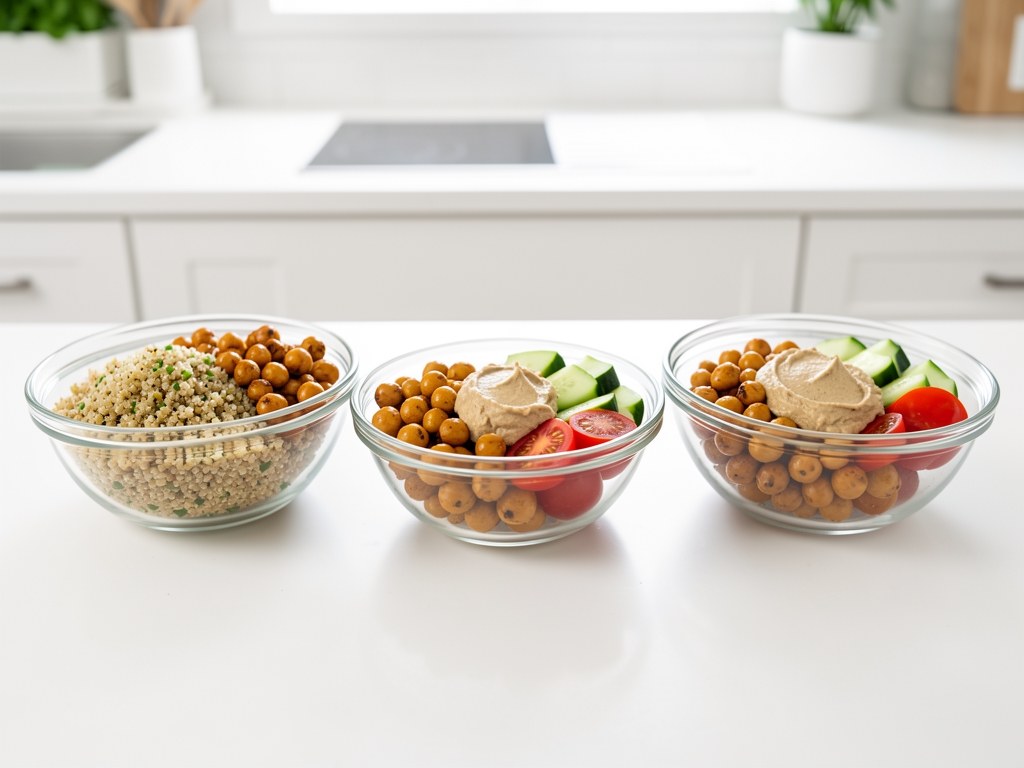
Batch Cooking Grains and Legumes for the Week
Grains like brown rice, quinoa, farro, and barley are the backbone of many vegetarian meals. Cooking a large batch at the start of the week gives you a base for grain bowls, stir-fries, or simple sides. Similarly, legumes such as chickpeas, lentils, and black beans provide protein and fiber, making them essential for plant-based meal prep.
To cook grains and legumes efficiently, you can use a rice cooker, an Instant Pot, or a large pot on the stove. Many people cook a few cups at a time and store the extras in the refrigerator. Having these ready means you can assemble a filling meal in minutes. For protein completeness, combine legumes with whole grains like quinoa, and add nuts, seeds, or a dollop of yogurt or tahini to your bowls. This way, you cover all essential amino acids naturally throughout the day.
- Cook grains like farro, brown rice, or quinoa in bulk.
- Batch-cook chickpeas, lentils, or other beans for salads, soups, and bowls.
- Store cooked grains and legumes in separate airtight containers in the fridge.
Sources: Apartment Therapy, LLC (The Kitchn), Delish Knowledge, Grateful Grazer, The New Baguette
Roasting Vegetables in Bulk
Roasting a large tray of vegetables is one of the simplest ways to add flavor and nutrition to your meal prep. Chop a mix of sturdy vegetables like bell peppers, zucchini, broccoli, cauliflower, and sweet potatoes, toss them with a little oil and your favorite spices, and spread them on a sheet pan. Roast until tender and lightly browned.
You can use roasted vegetables as a side dish, toss them into grain bowls, or blend them into soups and sauces. To keep them from becoming mushy, store them in the refrigerator and use them within a few days. While you can freeze roasted vegetables, some, like those with high water content, may lose their texture when thawed.
- Roast a variety of vegetables in large batches to save time.
- Store roasted vegetables in the fridge and use within a few days for best quality.
- Use roasted vegetables in bowls, wraps, pastas, and grain salads.
Sources: Apartment Therapy, LLC (The Kitchn), Delish Knowledge, Grateful Grazer, The New Baguette
Make-Ahead Vegetarian Meals
Beyond individual components, you can prepare complete meals that are ready to reheat. These might include grain-based casseroles, lentil soups, chilis, and veggie-packed pastas. Many of these dishes freeze well, making them perfect for busy weeks or quick dinners.
When planning make-ahead meals, consider how you’ll combine your prepped components. For instance, you might assemble a few jars of layered salads with cooked grains, beans, and fresh greens, or prepare a batch of vegetable stir-fry that just needs a quick reheat.
One simple way to start is with a big pot of lentil soup. Here’s a recipe that’s easy to double and freeze.
- Soups, stews, and chilis are excellent freezer-friendly make-ahead meals.
- Grain-based casseroles can be assembled and refrigerated or frozen before baking.
- Use roasted vegetables and cooked grains to create varied bowls throughout the week.
- Ingredients: 1 tablespoon olive oil, 1 onion (chopped), 2 carrots (diced), 2 celery stalks (diced), 3 cloves garlic (minced), 1 cup dried green or brown lentils (rinsed), 1 can (14.5 oz) diced tomatoes, 4 cups vegetable broth, 1 teaspoon ground cumin, 1/2 teaspoon smoked paprika, Salt and pepper to taste, 2 cups chopped spinach or kale (optional).
- Heat the olive oil in a large pot over medium heat. Add the onion, carrots, and celery, and cook until softened, about 5 minutes.
- Stir in the garlic and cook for another minute until fragrant.
- Add the lentils, diced tomatoes (with their juices), vegetable broth, cumin, and smoked paprika. Bring to a boil, then reduce heat and simmer, covered, for 25 to 30 minutes, or until the lentils are tender.
- Season with salt and pepper to taste. If using, stir in the spinach or kale and cook until wilted, about 2 minutes.
- Let the soup cool slightly before portioning into containers. It will keep in the fridge for a few days or can be frozen for longer storage.
- This recipe makes about 4 servings. Reheat individual portions in the microwave or on the stovetop until hot.
Sources: Delish Knowledge, Grateful Grazer, Apartment Therapy, LLC (The Kitchn), The New Baguette
Reheating Tips
The right storage containers help keep your prepped meals fresh and safe. Look for airtight options, such as glass containers with snug lids, which are reusable and easy to label. Mason jars work well for layered salads, and silicone bags are handy for snacks and small components.
To keep track of what you’ve prepared, label each container with the dish and date. This helps you use items before they lose quality. While you can freeze many vegetarian meals, some components, like roasted vegetables, are best kept in the refrigerator and eaten within a few days. For specific food safety guidance, consult official resources like the USDA or your local health department.
- Use airtight glass or plastic containers with lids for most prepped foods.
- Label containers with the name and date to avoid confusion.
- Store cooked grains and legumes in the fridge and use within a few days for best quality; for safety, consult food safety guidelines.
- Freeze soups, stews, and casseroles for longer storage, but note that textures may change when thawed.
Sources: Grateful Grazer, Apartment Therapy, LLC (The Kitchn), Delish Knowledge
Budget-Friendly Vegetarian Staples
Eating vegetarian doesn't have to be expensive. In fact, many plant-based staples are budget-friendly, especially when bought in bulk. Grains like brown rice, oats, and pasta are low-cost, while dried beans and lentils are often cheaper than canned versions and just as easy to cook.
To keep your meal prep budget-friendly, focus on seasonal vegetables and buy frozen produce when fresh is pricey. Repurposing leftovers and scraps can also help reduce food waste and save money. For example, save vegetable peels and ends to make broth, and use overripe bananas in smoothies or baked goods.
- Stock up on dried beans, lentils, and whole grains like rice and oats.
- Frozen vegetables are a budget-friendly alternative to fresh.
- Save vegetable scraps and stems for making broth or adding to soups.
- Plan meals around what’s on sale or in season.
Sources: Apartment Therapy, LLC (The Kitchn), Delish Knowledge
Frequently asked questions
How long do vegetarian prepared meals last?
For safety and quality, it’s best to follow general food safety guidelines. Most cooked vegetarian dishes, such as grain bowls or roasted vegetables, are typically consumed within three to four days when refrigerated, but always check for any signs of spoilage. For specific recommendations, consult the USDA or your local health department. Soups, stews, and casseroles can be frozen and will last longer, but textural changes may occur.
Sources: Apartment Therapy, LLC (The Kitchn), Delish KnowledgeWhat are the best containers for meal prep?
Airtight containers are essential for keeping prepped food fresh. Glass containers with tight-fitting lids are a popular choice because they are durable, easy to clean, and don't absorb odors. Mason jars are great for layered salads and overnight oats, while silicone bags are useful for snacks and small items. Choose containers that fit your portion sizes and are easy to stack in the fridge.
Sources: Grateful GrazerCan I freeze vegetarian meals?
Yes, many vegetarian meals freeze well. Soups, stews, chilis, and grain-based casseroles are excellent for freezing. However, some ingredients may change texture after thawing. For example, dishes with high-water vegetables may become softer. When freezing, use freezer-safe containers and label them with the date. Thaw in the refrigerator before reheating.
Sources: Delish Knowledge, Grateful GrazerHow do I get enough protein in vegetarian meal prep?
Include a variety of protein-rich plant foods in your meal prep, such as lentils, chickpeas, black beans, tofu, tempeh, and edamame. Whole grains like quinoa also provide some protein. A typical vegetarian meal plan can easily meet protein needs by combining legumes, grains, nuts, and seeds throughout the day. Plan to include a source of protein in each meal, whether it's beans in a bowl, tofu in a stir-fry, or lentils in a soup.
Sources: Delish Knowledge, Grateful Grazer, The New BaguetteSources
- Meal Prep Plan: A Week of Easy Vegetarian Meals — Apartment Therapy, LLC (The Kitchn)
- 50 Easy Vegan Meal Prep Recipes — Delish Knowledge
- 50+ Vegetarian Meal Prep Ideas with High-Protein Recipes — Grateful Grazer
- 20+ Plant-Based Meal Prep Ideas — The New Baguette